
What does "astringent" mean in food and drink?
Astringent describes the dry, rough, puckering feeling that some foods and drinks leave in your mouth, as with strong black tea, unripe fruit or walnut skins. It is not a taste like sweet or sour but a sensation: your mouth feels as if it has lost its slipperiness.
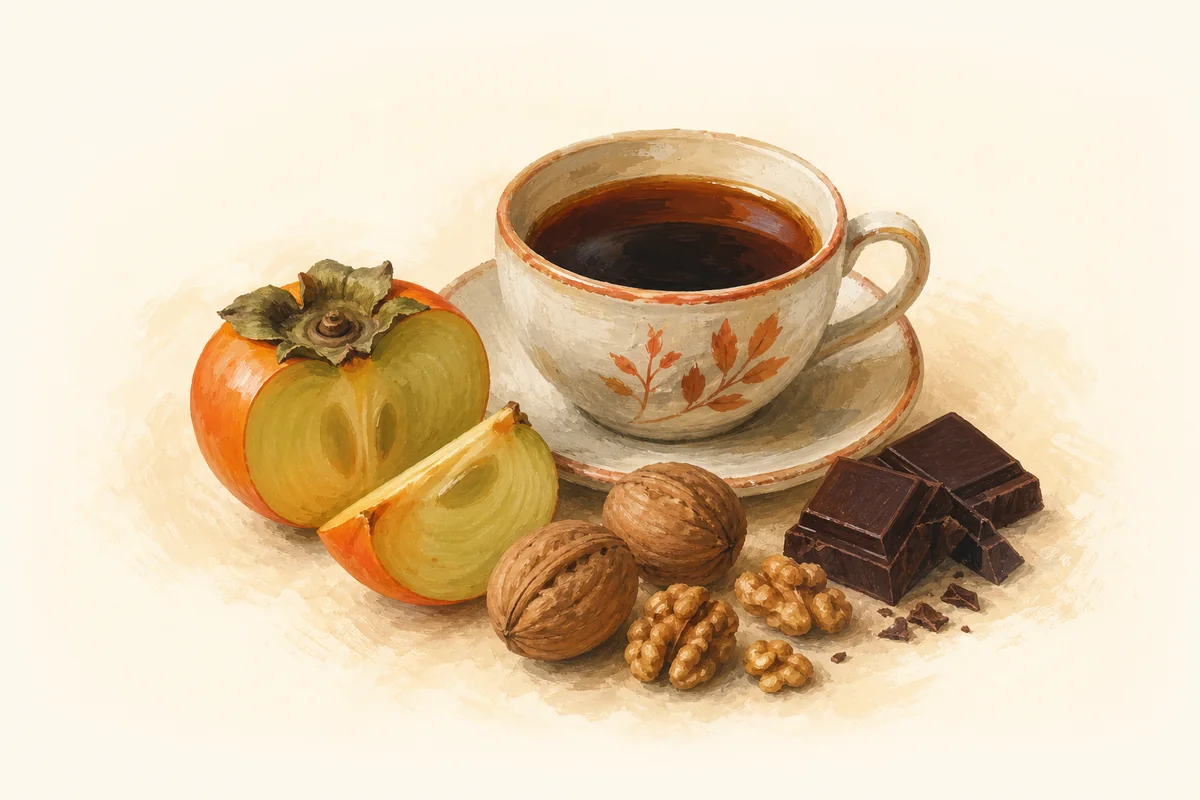
What astringency feels like
- Dry: your mouth feels as if the moisture has been wiped away.
- Rough: your tongue and the inside of your cheeks feel slightly furry or gritty.
- Puckering: your mouth wants to draw together.
It often comes with bitterness, so the two are easily confused. Bitterness is a taste on the tongue; astringency is a feeling across the whole mouth.
What causes it
The usual cause is tannins, plant compounds found in tea, grape skins, many unripe fruits and nut skins. The most studied explanation is that tannins bind to proteins in saliva, which normally keep the mouth slippery (see the review in the sources). The saliva loses its lubricating effect, and the mouth feels dry and rough. Researchers agree the full mechanism is not settled yet.
Where you find it
| Food or drink | How astringent |
|---|---|
| Strong black tea, especially left to steep long | High |
| Unripe persimmon or banana | Very high |
| Walnut and almond skins | Medium |
| Very dark chocolate | Medium |
| Pomegranate and cranberries | Medium |
| Green tea | Low to medium |
Why some people like it
A little astringency makes food feel less heavy: it cuts through fat and sweetness, which is why strong tea goes so well with rich cakes. Too much, and the mouth feels parched. People differ widely in where their line is.
How to soften it
- Add milk to tea. The proteins in milk bind the tannins before your saliva does.
- Eat fruit fully ripe. Ripening reduces the active tannins, which is why a ripe persimmon tastes sweet and soft.
- Pair it with fat or protein, such as cheese or nuts.
How does it fit your own taste?
Some people love the grip of strong tea or dark chocolate, others find it unpleasant. Taste10 learns your personal taste and predicts how much you will enjoy a food or drink before you try it, with the reason why.
Taste10 is in testing. Want to try it early? Get in touch.
Questions and answers
Is astringent the same as bitter?
No. Bitter is a taste picked up by the tongue. Astringent is a dry, rough feeling across the mouth. They often come together, in strong tea for example.
Why does strong tea make my mouth feel dry?
Tea contains tannins, which bind to proteins in saliva. The saliva loses its slipperiness, so the mouth feels dry and rough.
How can I make tea less astringent?
Steep it for a shorter time, use water slightly below boiling, or add milk, whose proteins bind the tannins.
More about taste
- What is umami? The fifth taste explained
- What does matcha taste like?
- What is an acquired taste, and why do tastes change?
Sources
- Wine and grape tannin interactions with salivary proteins and their impact on astringency: a review of current research. Molecules, 16(3), 2348 (2011). pmc.ncbi.nlm.nih.gov/articles/PMC6259628