
Everyone is ordering dishes to share and I get one pick
Listen to what the others order first, then choose the dish that fills a gap: if the table already has rich or fried dishes, add a vegetable, a noodle dish or something fresh. Pick something you would happily eat a lot of, since your choice is the one you can count on, and check the heat with the table. Taste10 ranks the menu for your personal taste, so your one pick is a dish you will enjoy.
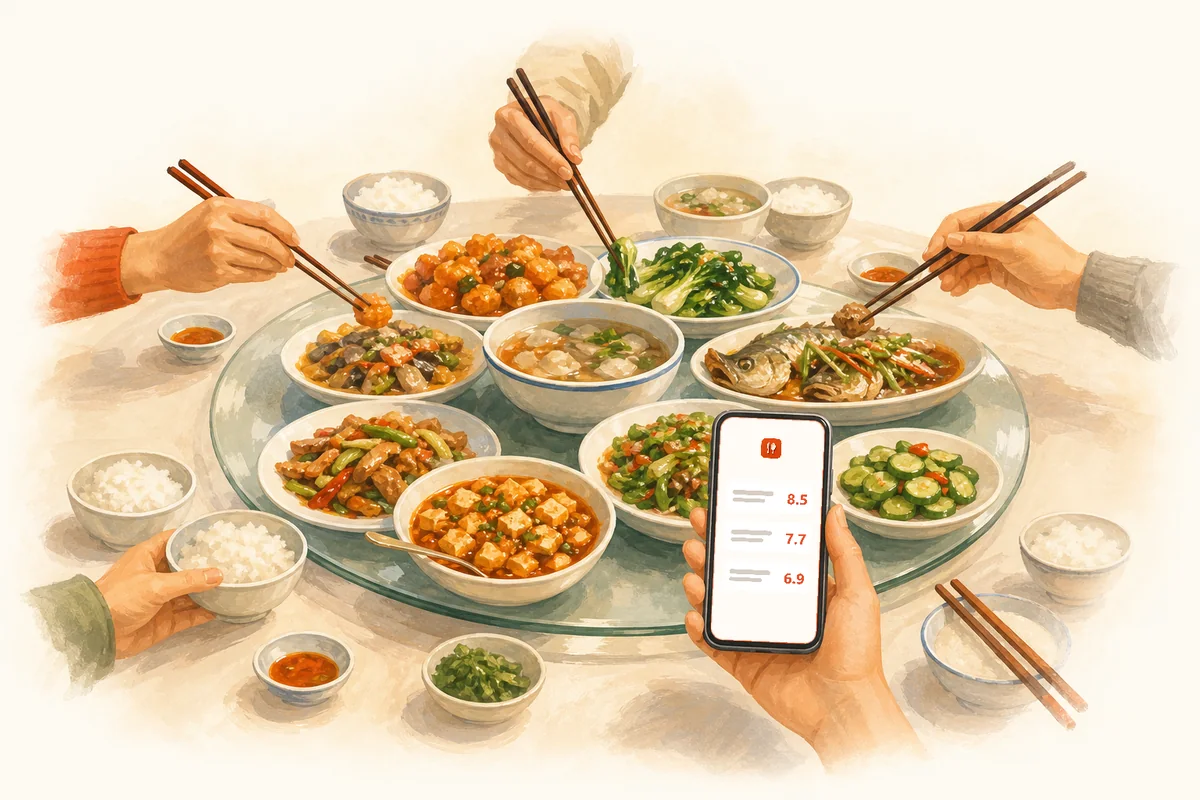
The moment
A round table, eight people and one menu going around. The rule is simple: everyone picks one dish, and everything is shared. Your turn is coming. You want to pick something you will enjoy, but also something the table will be glad you ordered, and not the fourth fried dish in a row.
How family-style dining works
Eating family style means that dishes come to the middle of the table and everyone takes a little of each, often with rice or bread for everyone. It is how meals are usually eaten in Chinese, Korean, Indian, Middle Eastern and Spanish restaurants (where small plates are called tapas), and it is common at group dinners everywhere. A common rule of thumb: about one dish per person, plus rice or bread.
What usually goes wrong
- Everyone orders the same kind of dish: three fried ones, two curries, no vegetables.
- You order something only you will eat, or something you do not enjoy, just to seem easy-going.
- The heat is wrong for half the table.
- The dish you were counting on runs out before it reaches you.
What to do in the next five minutes
- Listen to the orders before yours. Note what the table already has.
- Fill the gap using the table below.
- Choose something you would happily eat a lot of. Your pick is the dish you can count on if the rest is not for you.
- Ask about heat if the table includes people who do not eat chilli.
- Make sure there is rice, noodles or bread. It ties the meal together.
What to add, depending on what the table has
| If the table already has | Add |
|---|---|
| Several fried or crispy dishes | Steamed vegetables, a fresh salad or a soup |
| Several rich, creamy dishes | Something sour or fresh, such as a vinegar-dressed salad or pickles |
| Mostly meat | A vegetable, tofu or egg dish |
| Mostly hot, spicy dishes | Something mild and comforting, such as fried rice or a dal |
| No carbohydrates | Noodles, rice, bread or dumplings |
Dim sum: the classic shared meal
Dim sum, probably Cantonese in origin, are small steamed and fried dishes eaten with tea, usually ordered a few at a time and shared. In many restaurants you tick dishes on an order sheet or choose from passing trolleys. Order a few, see what the table likes, then order more of it.
Where Taste10 fits
While the menu is with someone else, take a photo of it. Taste10 ranks the dishes for your personal taste, best first, with the reason why, so when your turn comes you already know which dish you will enjoy. Pick the best one that also fills a gap on the table, and everyone wins. The score is about your taste, not about the restaurant.
Make your one pick count
Taste10 learns your personal taste and predicts which dishes on a menu you will enjoy most, so your pick is one you are happy to share.
Taste10 is in testing. Want to try it early? Get in touch.
Questions and answers
What is family style dining?
A way of eating where dishes come to the middle of the table and everyone shares them, usually with rice or bread. It is the normal way to eat in many Chinese, Korean, Indian and Middle Eastern restaurants.
How many dishes should you order for a group?
A common rule of thumb is about one dish per person, plus rice, noodles or bread. Order a few more later if the table is still hungry.
How do you order dim sum?
Order a few dishes at a time, from a menu sheet or the passing trolleys, share them with tea, and order more of the ones the table likes.
What should I order when sharing plates?
A dish that fills a gap on the table, such as vegetables, noodles or something fresh, and that you would happily eat a lot of yourself.
More about taste
- What’s on a Chinese menu? 20 popular dishes and what they taste like
- Korean dishes explained: a first-timer's guide to the menu
- How to decide what to order at a restaurant
Sources
- Encyclopaedia Britannica: dim sum. britannica.com/topic/dim-sum