
What's on a Chinese menu? 20 popular dishes and what they taste like
Chinese restaurant food abroad mixes mild Cantonese cooking, hot and numbing Sichuan dishes and favourites created outside China. Dim sum, roast meats, sweet and sour dishes, chow mein, lo mein and fried rice are not spicy; kung pao chicken, mapo tofu and dan dan noodles are. Here are 20 popular Chinese dishes, what they taste like, and the menu words that help you guess the rest.
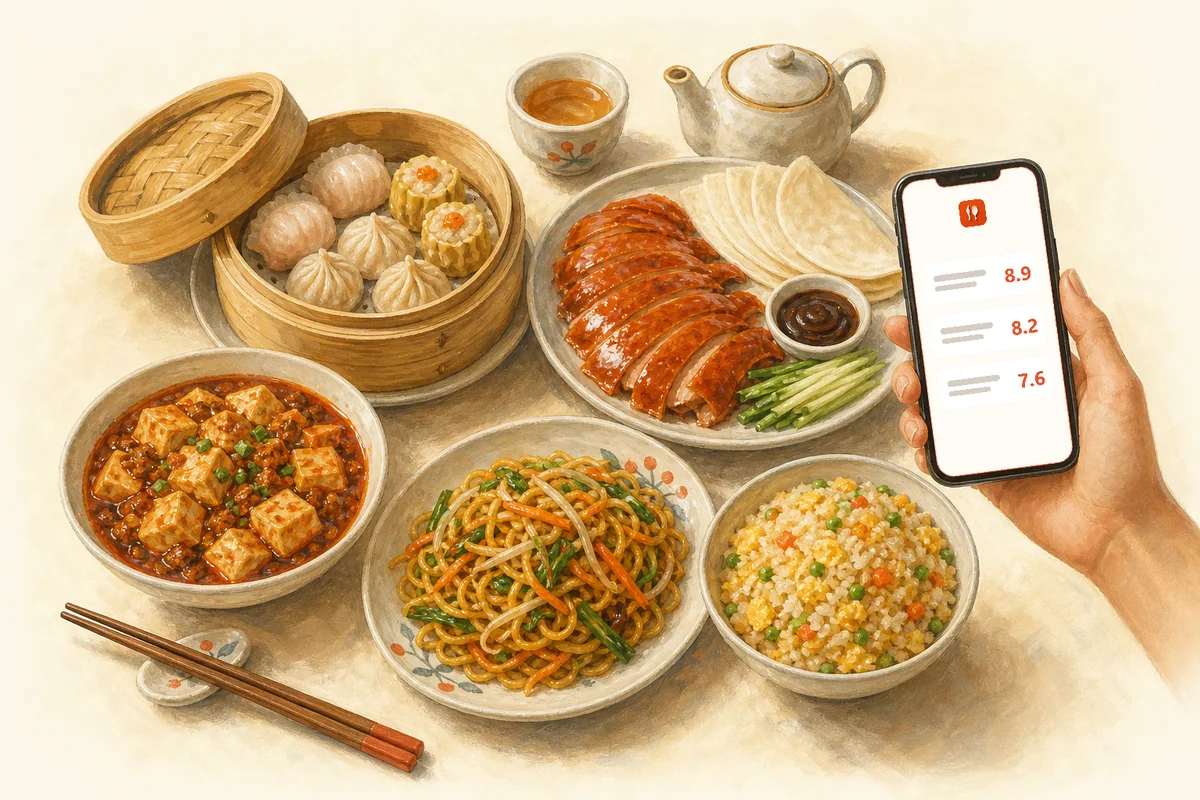
Most Chinese restaurants outside China serve a mix of Cantonese cooking from the south (dim sum, roast meats, sweet and sour dishes), Sichuan cooking from the west (chilli and numbing Sichuan pepper) and dishes created for diners abroad, such as General Tso's chicken and beef and broccoli. The order below goes from starters and dim sum through the sweet favourites and roast meats to the hot Sichuan dishes, then noodles and rice.
Starters and soups
1. Spring rolls
Thin wheat wrappers rolled around shredded vegetables such as cabbage and carrot, sometimes with pork or prawns, and deep-fried. Usually served with a sweet chilli or plum sauce. Crisp and flaky outside, soft and savoury inside; the dip brings the sweetness.
2. Hot and sour soup
A thick soup with tofu, mushrooms or wood ear fungus, bamboo shoots and often egg ribbons. In China it gets its heat from white pepper and its sourness from black vinegar. Peppery, tangy and savoury at once, with a warming burn at the back of the throat.
3. Wonton soup
Small dumplings of pork or prawns in thin, silky wrappers, served in a clear broth with spring onion and sometimes greens or noodles. Light, clean and savoury: one of the gentlest dishes on the menu.
Dim sum and dumplings
4. Har gow
Cantonese prawn dumplings in a wrapper of wheat and tapioca starch that turns almost see-through when steamed. Sweet, juicy prawn in a soft, slightly chewy skin.
5. Siu mai
Cantonese dumplings of minced pork, prawn and mushroom in a thin yellow wrapper, left open at the top and often finished with a dot of crab roe or carrot. Meaty, juicy and savoury, firmer than har gow.
6. Char siu bao
A soft, white steamed bun filled with char siu (Cantonese roast pork) in a thick, sweet and savoury sauce. Fluffy and slightly sweet outside, sticky and rich inside.
7. Xiao long bao
Small steamed dumplings, generally thought to come from Shanghai, filled with pork and a gelled stock that melts into soup in the steamer. Eat them carefully: bite a small hole, sip the soup, then eat the rest. Hot, rich broth and tender pork in a thin, delicate skin.
8. Jiaozi and potstickers
Half-moon dumplings of minced meat and vegetables, boiled or steamed, and one of the main dishes of Chinese New Year in northern China. Pan-fried ones are sold as potstickers (guotie). Served with a dip of vinegar and soy sauce. Juicy and savoury; potstickers add a crisp, golden base.
Sweet and crispy restaurant favourites
9. Sweet and sour chicken or pork
Battered, deep-fried chicken, pork or prawns in a glossy sauce of sugar and vinegar, often with pineapple and peppers. Versions abroad often add ketchup; the original Cantonese sweet and sour pork uses vinegar, preserved plums and hawthorn. Crunchy, sticky and clearly sweet with a sharp, fruity tang.
10. General Tso's chicken
Fried pieces of chicken in a thick, sweet, slightly hot sauce. It was created in Hunan-style restaurants in New York in the 1970s and named after a 19th-century Chinese general: an American Chinese dish. Crisp, sweet and savoury with a gentle chilli kick.
11. Beef and broccoli
Sliced beef stir-fried with broccoli in a brown sauce of oyster sauce, soy and garlic. An American Chinese dish, based on a Chinese one made with gai lan (Chinese broccoli). Savoury, salty and mild, with tender beef and crunchy greens.
12. Egg foo young
A thick omelette filled with vegetables and meat or prawns, a dish with roots in Guangdong. In American Chinese restaurants it comes as pancakes covered in a brown sauce or gravy. Soft and eggy, savoury and comforting, with no heat.
Roast meats
13. Peking duck
A roast duck from Beijing, prepared since the imperial era and prized for its thin, crisp skin. It is carved at the table and rolled into thin pancakes with spring onion, cucumber and sweet bean sauce. Crispy aromatic duck, found in many British restaurants, is a different, deep-fried dish served the same way. Crisp, fatty skin, tender meat and a sweet, salty sauce, freshened by the cucumber.
14. Char siu
Cantonese barbecued pork, glazed with honey or maltose while it roasts, which gives it a red, shiny edge. Served sliced over rice or noodles. Sweet, sticky and smoky, with a savoury, slightly salty depth.
Sichuan dishes: hot and numbing
15. Kung pao chicken
Diced chicken stir-fried with peanuts, chillies and Sichuan pepper, from Sichuan. The name (gong bao) is believed to honour a 19th-century governor of the province. Hot, nutty and slightly sweet and sour, with a light tingle from the pepper.
16. Mapo tofu
Soft tofu in a red sauce of fermented broad bean and chilli paste (doubanjiang), fermented black beans and minced meat, finished with ground Sichuan pepper. Hot, numbing and deeply savoury, with silky, tender tofu.
17. Dan dan noodles
Noodles in a sauce of chilli oil and Sichuan pepper, topped with minced pork and spring onion. The name comes from the carrying pole of the street vendors who once sold them. Spicy, nutty and savoury, with a numbing tingle.
Noodles and rice
18. Chow mein
Stir-fried noodles with vegetables and meat or prawns. Crispy chow mein uses fried noodles; soft chow mein uses boiled noodles. Savoury and slightly smoky from the wok, crisp or soft depending on the style.
19. Lo mein
Boiled wheat noodles tossed with sauce, vegetables and meat; "lo mein" means stirred noodles. Softer and saucier than chow mein. Soft, slippery noodles coated in a savoury soy sauce.
20. Egg fried rice
Cooked rice stir-fried with egg, spring onion and often peas; special fried rice adds prawns, pork or chicken. The standard side for most dishes. Savoury, lightly smoky and mild: the easy partner for anything hot or sweet.
Which Chinese dishes are spicy?
Most of the dishes people order at a Chinese restaurant abroad are not hot at all. The heat sits mainly in the Sichuan dishes, which add a second sensation: Sichuan pepper, with a citrus-like flavour and a tingling numbness on the lips and tongue. Cooks call the pair ma la, numbing and spicy. For how chilli heat is measured, see the Scoville scale. Kitchens differ, so take this as a rough guide.
| Heat | Dishes | What to expect |
|---|---|---|
| None | dim sum, wonton soup, Peking duck, char siu, sweet and sour, beef and broccoli, egg foo young, chow mein, lo mein, egg fried rice | savoury, sweet or mild |
| Gentle | General Tso's chicken, hot and sour soup | a little chilli or a peppery warmth |
| Hot | kung pao chicken | chilli with a light tingle |
| Hot and numbing | mapo tofu, dan dan noodles | chilli plus the tingle of Sichuan pepper |
Menu words that tell you what is in a dish
Chinese menus abroad often keep a few Chinese words in Latin letters, some in Cantonese and some in Mandarin. A handful is enough to read most of them.
| Word on the menu | What it means | Example |
|---|---|---|
| chow / chao | stir-fried | chow mein |
| mein / mian | noodles | lo mein |
| lo | stirred, tossed | lo mein |
| bao | a steamed bun | char siu bao |
| jiaozi | dumplings | pork jiaozi |
| char siu | Cantonese barbecued pork | char siu bao |
| gai lan | Chinese broccoli | gai lan with oyster sauce |
| ma la | numbing and spicy | mala chicken |
| yu xiang | "fish-fragrant": pickled chilli, garlic, ginger, sugar and vinegar, with no fish in it | yu xiang aubergine |
| dim sum | small dishes served with tea | a dim sum lunch |
Sauces you will see on the menu
- Black bean sauce: made with fermented black beans. Salty, savoury and a little funky.
- Oyster sauce: thick, dark and savoury-sweet, the base of many stir-fries such as beef and broccoli.
- Hoisin sauce: thick, sweet and salty, used as a glaze and a dip.
- Sweet and sour: sugar and vinegar, often with pineapple. Clearly sweet.
- Salt and pepper: a dry style rather than a sauce, the food fried and tossed with salt, pepper, garlic and chilli.
What to order at a Chinese restaurant
Chinese meals are usually shared: several dishes in the middle of the table, rice or noodles for everyone. For a first visit, a balanced order for two is a few dumplings or spring rolls, one crispy or sweet dish, one stir-fry with vegetables, one noodle dish and egg fried rice. For example: har gow, sweet and sour chicken, beef and broccoli, lo mein and egg fried rice. If you like heat, swap one dish for kung pao chicken or mapo tofu; if you are unsure about Sichuan pepper, try a dish with it on the side of something mild first.
All 20 at a glance
| Dish | Taste |
|---|---|
| Spring rolls | Crisp and flaky outside, soft and savoury inside; the dip brings the sweetness |
| Hot and sour soup | Peppery, tangy and savoury at once, with a warming burn at the back of the throat |
| Wonton soup | Light, clean and savoury: one of the gentlest dishes on the menu |
| Har gow | Sweet, juicy prawn in a soft, slightly chewy skin |
| Siu mai | Meaty, juicy and savoury, firmer than har gow |
| Char siu bao | Fluffy and slightly sweet outside, sticky and rich inside |
| Xiao long bao | Hot, rich broth and tender pork in a thin, delicate skin |
| Jiaozi and potstickers | Juicy and savoury; potstickers add a crisp, golden base |
| Sweet and sour chicken or pork | Crunchy, sticky and clearly sweet with a sharp, fruity tang |
| General Tso's chicken | Crisp, sweet and savoury with a gentle chilli kick |
| Beef and broccoli | Savoury, salty and mild, with tender beef and crunchy greens |
| Egg foo young | Soft and eggy, savoury and comforting, with no heat |
| Peking duck | Crisp, fatty skin, tender meat and a sweet, salty sauce, freshened by the cucumber |
| Char siu | Sweet, sticky and smoky, with a savoury, slightly salty depth |
| Kung pao chicken | Hot, nutty and slightly sweet and sour, with a light tingle from the pepper |
| Mapo tofu | Hot, numbing and deeply savoury, with silky, tender tofu |
| Dan dan noodles | Spicy, nutty and savoury, with a numbing tingle |
| Chow mein | Savoury and slightly smoky from the wok, crisp or soft depending on the style |
| Lo mein | Soft, slippery noodles coated in a savoury soy sauce |
| Egg fried rice | Savoury, lightly smoky and mild: the easy partner for anything hot or sweet |
Which of these would you like most?
A guide tells you what each dish tastes like. Taste10 learns your personal taste and predicts which of these you will enjoy most. Photograph a Chinese menu, or take a screenshot of a delivery app's menu, and see the dishes ranked for you, with the reason why.
Taste10 is in testing. Want to try it early? Get in touch.
Questions and answers
What is the difference between lo mein and chow mein?
Both are Chinese wheat noodles with vegetables and meat. In lo mein the boiled noodles are tossed with the sauce, so they are soft and saucy. Chow mein means stir-fried noodles: crispy chow mein uses fried noodles, soft chow mein boiled ones, and both are less saucy than lo mein.
What is dim sum?
Dim sum is the Cantonese tradition of small dishes, such as dumplings and steamed buns, eaten with tea. The meal is called yum cha. Har gow, siu mai and char siu bao are among the best known.
Is General Tso’s chicken a real Chinese dish?
It was created in Hunan-style restaurants in New York in the 1970s and named after a 19th-century Chinese general, so it is an American Chinese dish rather than a traditional one.
Which Chinese dishes are not spicy?
Most of them: dim sum, wonton soup, Peking duck, char siu, sweet and sour dishes, beef and broccoli, egg foo young, chow mein, lo mein and egg fried rice. The hot ones are mainly the Sichuan dishes, such as kung pao chicken, mapo tofu and dan dan noodles.
What does Sichuan pepper taste like?
Sichuan pepper has a citrus-like flavour and causes a tingling, numbing feeling on the lips and tongue. It is not hot like chilli; the two together are called ma la, numbing and spicy.
More about taste
- What's on an Indian menu? 20 popular dishes from mild to hot, and what they taste like
- What's on a Japanese menu? 20 dishes and what they taste like
- What should I get for dinner? How to choose takeout you'll enjoy
- What is the Scoville scale? Chilli heat from mild to extreme
Sources
- Dim sum. Wikipedia. en.wikipedia.org/wiki/Dim_sum
- Har gow. Wikipedia. en.wikipedia.org/wiki/Har_gow
- Shumai. Wikipedia. en.wikipedia.org/wiki/Shumai
- Xiaolongbao. Wikipedia. en.wikipedia.org/wiki/Xiaolongbao
- Jiaozi. Wikipedia. en.wikipedia.org/wiki/Jiaozi
- Hot and sour soup. Wikipedia. en.wikipedia.org/wiki/Hot_and_sour_soup
- Sweet and sour. Wikipedia. en.wikipedia.org/wiki/Sweet_and_sour
- General Tso's chicken. Wikipedia. en.wikipedia.org/wiki/General_Tso%27s_chicken
- Beef and broccoli. Wikipedia. en.wikipedia.org/wiki/Beef_and_broccoli
- Egg foo young. Wikipedia. en.wikipedia.org/wiki/Egg_foo_young
- Peking duck. Wikipedia. en.wikipedia.org/wiki/Peking_duck
- Char siu. Wikipedia. en.wikipedia.org/wiki/Char_siu
- Kung Pao chicken. Wikipedia. en.wikipedia.org/wiki/Kung_Pao_chicken
- Mapo tofu. Wikipedia. en.wikipedia.org/wiki/Mapo_tofu
- Dandan noodles. Wikipedia. en.wikipedia.org/wiki/Dandan_noodles
- Chow mein. Wikipedia. en.wikipedia.org/wiki/Chow_mein
- Lo mein. Wikipedia. en.wikipedia.org/wiki/Lo_mein
- Sichuan pepper. Wikipedia. en.wikipedia.org/wiki/Sichuan_pepper
- Yuxiang. Wikipedia. en.wikipedia.org/wiki/Yuxiang