
What's on an Indian menu? 20 popular dishes from mild to hot, and what they taste like
Indian restaurant food is built on onion, garlic, ginger, tomato, yoghurt and spice blends, and its curries run from mild and creamy to very hot. Korma, butter chicken and chicken tikka masala are the mildest; rogan josh and bhuna are medium; madras and vindaloo are hot. Here are 20 popular Indian dishes, what they taste like, and the menu words that help you guess the rest.
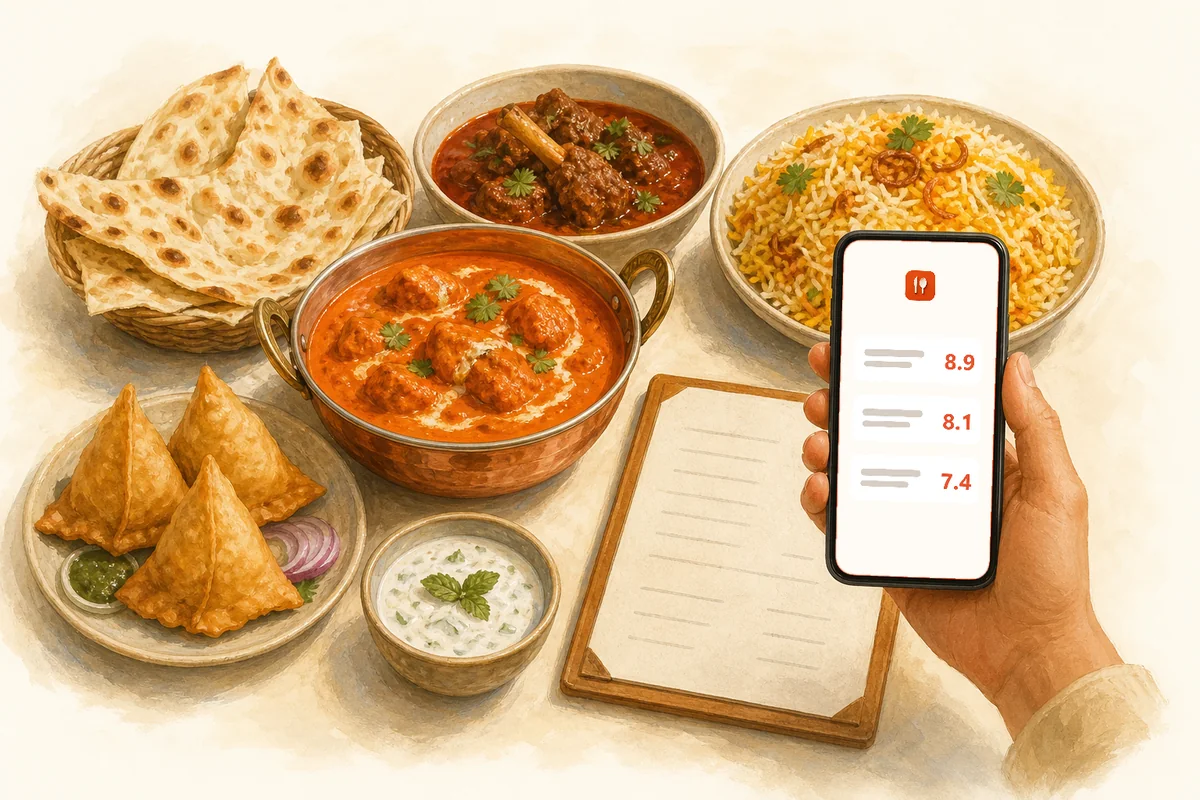
Most Indian restaurants outside India follow the menu of the curry house: starters, dishes from the tandoor oven, a long list of curries from mild to hot, then rice, bread and side dishes. Many of these dishes come from North India; some, such as chicken tikka masala and madras, were created for restaurants abroad. The order below goes from starters through the curries, roughly from mild to hot, to rice and bread.
Starters
1. Samosa
A triangle of crisp pastry filled with spiced potato and peas, sometimes minced lamb, deep-fried and served with tamarind or mint chutney. Crunchy shell, soft and gently spiced inside; the chutney adds sweet and sour.
2. Onion bhaji
Sliced onion in a batter of gram (chickpea) flour and spices, fried into a loose, crunchy ball. Pakora is the same idea with other vegetables, paneer or chicken. Crisp, savoury and sweet from the onion, with a warm cumin note.
From the tandoor
3. Tandoori chicken
Chicken on the bone, marinated in yoghurt and spices and roasted in a tandoor, a tall clay oven. Smoky, tangy from the yoghurt and charred at the edges; warm rather than hot.
4. Chicken tikka
Boneless chunks of chicken in the same kind of marinade, cooked on skewers in the tandoor. Paneer tikka is the version with cubes of Indian fresh cheese. Juicy, smoky and lightly spiced: one of the safest first orders.
Mild and creamy curries
5. Korma
Meat or vegetables braised in a thick sauce of yoghurt or cream, often with ground almonds or cashews. Its roots are in the Mughal court kitchens. Mild, creamy and slightly sweet, more fragrant than spicy.
6. Butter chicken (murgh makhani)
Tandoor-cooked chicken in a smooth tomato sauce rich with butter and cream. It was made famous in the 1950s by the Moti Mahal restaurant in Delhi. Rich, buttery and mildly tangy from the tomato; gentle heat.
7. Chicken tikka masala
Chicken tikka in a creamy, spiced tomato sauce. It is thought to have been created in Britain, possibly in Glasgow, and is close to butter chicken. Creamy and tomatoey with more spice than butter chicken, still mild to medium.
Medium curries
8. Rogan josh
Lamb or goat slow-cooked in a deep red sauce, from Kashmir. The colour comes from Kashmiri chillies, which are more red than hot; restaurants abroad often add tomato. Rich, aromatic and warming, with a medium heat.
9. Bhuna
A dry style of curry: the spices and onion paste are fried first, then the meat cooks slowly in them until the sauce clings to it. Deep, roasted and savoury, with a thick sauce rather than a soupy one.
10. Jalfrezi
Meat, paneer or vegetables stir-fried with peppers, onion and fresh green chillies in a thick sauce. It began in Bengal under British rule as a way to use up leftovers. Fresh, peppery and hotter than most medium curries.
11. Dhansak
Chicken or lamb cooked with lentils and vegetables, a dish of the Parsi community of Gujarat. A version of it became a standard curry in British restaurants. Sweet, sour and hot at once, thickened by the lentils.
Hot curries
12. Madras
A red curry of onion, tomato, chilli and curry powder. Despite the name it was invented in Anglo-Indian cooking, and the name is unknown in India itself. Hot and tangy: a clear step up from medium.
13. Vindaloo
The name comes from a Portuguese dish of Goa, pork in wine (later vinegar) and garlic. In British curry houses it became the very hot curry, made with any meat. Very hot and sharp with vinegar and garlic. Order it only if you love chilli.
Lentils, chickpeas and vegetables
14. Dal
Split lentils or other pulses cooked into a soft stew. Tarka dal is finished with spices fried in oil or ghee; dal makhani, from Punjab, is black lentils slow-cooked with butter and cream. Earthy and comforting; tarka dal is light and garlicky, dal makhani rich and smoky.
15. Chana masala
Chickpeas in a tomato and onion sauce with ginger and spices, often eaten with fried bread such as bhatura or puri. Tangy, hearty and warmly spiced, medium heat.
16. Saag or palak paneer
Cubes of paneer, a mild fresh cheese that does not melt, in a thick purée of spinach (palak) or other greens (saag). Green, earthy and creamy; the paneer is soft and milky.
17. Aloo gobi
Potatoes (aloo) and cauliflower (gobi) cooked dry with turmeric, cumin, ginger and garlic, which turn it yellow. Savoury, earthy and mildly spiced.
Rice, bread and the south
18. Biryani
Rice slow-cooked in layers with spiced meat, fish or vegetables, saffron and fried onions, a dish of Persian and Mughal roots. Often served with raita. Fragrant and rich; every spoonful tastes a little different.
19. Masala dosa
A large, thin crêpe of fermented rice and lentil batter, filled with spiced potato and served with coconut chutney and sambar, a lentil soup. A South Indian breakfast found on many menus. Crisp, slightly sour from the fermentation, with a soft, spiced filling.
20. Naan
A soft, leavened flatbread baked against the wall of the tandoor, plain or with garlic, butter or a filling such as cheese or keema (minced meat). Roti and chapati are the thinner, everyday breads. Fluffy, chewy and lightly charred: the best tool for the sauce.
Types of curry from mild to hot
Restaurants in Britain and many other countries sort their curries by a shared, informal heat ladder. In India itself the same names can be milder or hotter, and every kitchen differs, so take it as a rough guide. For how chilli heat is measured, see the Scoville scale.
| Heat | Curries | What to expect |
|---|---|---|
| Mild | korma, pasanda, butter chicken, dal makhani | creamy, sweet, fragrant |
| Mild to medium | chicken tikka masala, saag paneer, aloo gobi | tomato or spinach with a little warmth |
| Medium | rogan josh, bhuna, dhansak, chana masala | rich and spiced, a gentle burn |
| Medium to hot | jalfrezi | fresh green chilli |
| Hot | madras | a clear chilli burn |
| Very hot | vindaloo | for people who love chilli |
| Extreme | phall | a British curry-house invention, hotter than vindaloo |
Menu words that tell you what is in a dish
Indian menus abroad name many dishes after their main ingredients in Hindi or Urdu. A handful of words is enough to read most of them.
| Word on the menu | What it means | Example |
|---|---|---|
| murgh | chicken | murgh makhani (butter chicken) |
| gosht | meat, usually lamb or goat | rogan gosht |
| machli | fish | machli tikka |
| aloo | potato | aloo gobi |
| gobi | cauliflower | gobi manchurian |
| palak / saag | spinach / leafy greens | palak paneer |
| chana | chickpeas | chana masala |
| paneer | a mild fresh cheese that does not melt | paneer tikka |
| makhani | with butter | dal makhani |
| tikka | boneless pieces, marinated and grilled | chicken tikka |
| tandoori | cooked in the tandoor clay oven | tandoori chicken |
| masala | a mix of spices, or a spiced sauce | chana masala |
Side dishes, drinks and sweets
- Papadums: thin, crunchy discs of lentil flour, often brought first with a tray of chutneys: sweet mango, sharp lime pickle, mint yoghurt and chopped onion.
- Raita: cool yoghurt with cucumber, mint or cumin. Many people take a spoonful between bites of a hot curry.
- Lassi: a thick yoghurt drink, salted or sweet; mango lassi is the most popular in restaurants abroad.
- Gulab jamun: soft fried milk dough balls in a rose and cardamom syrup. Very sweet.
- Kulfi: a dense frozen milk dessert, often with pistachio or cardamom; firmer and creamier than ice cream.
What to order at an Indian restaurant
For a first visit, a balanced order for two is a starter to share, one creamy curry, one medium curry, a lentil or vegetable dish, rice and a naan. For example: onion bhaji, butter chicken, rogan josh, tarka dal, pilau rice and a garlic naan. Indian meals are usually shared, so ordering different dishes and tasting each is the norm. If you like heat, add a jalfrezi or a madras; if you are unsure, ask for a dish to be made milder, which most kitchens can do with a curry cooked to order.
All 20 at a glance
| Dish | Taste |
|---|---|
| Samosa | Crunchy shell, soft and gently spiced inside; the chutney adds sweet and sour |
| Onion bhaji | Crisp, savoury and sweet from the onion, with a warm cumin note |
| Tandoori chicken | Smoky, tangy from the yoghurt and charred at the edges; warm rather than hot |
| Chicken tikka | Juicy, smoky and lightly spiced: one of the safest first orders |
| Korma | Mild, creamy and slightly sweet, more fragrant than spicy |
| Butter chicken (murgh makhani) | Rich, buttery and mildly tangy from the tomato; gentle heat |
| Chicken tikka masala | Creamy and tomatoey with more spice than butter chicken, still mild to medium |
| Rogan josh | Rich, aromatic and warming, with a medium heat |
| Bhuna | Deep, roasted and savoury, with a thick sauce rather than a soupy one |
| Jalfrezi | Fresh, peppery and hotter than most medium curries |
| Dhansak | Sweet, sour and hot at once, thickened by the lentils |
| Madras | Hot and tangy: a clear step up from medium |
| Vindaloo | Very hot and sharp with vinegar and garlic |
| Dal | Earthy and comforting; tarka dal is light and garlicky, dal makhani rich and smoky |
| Chana masala | Tangy, hearty and warmly spiced, medium heat |
| Saag or palak paneer | Green, earthy and creamy; the paneer is soft and milky |
| Aloo gobi | Savoury, earthy and mildly spiced |
| Biryani | Fragrant and rich; every spoonful tastes a little different |
| Masala dosa | Crisp, slightly sour from the fermentation, with a soft, spiced filling |
| Naan | Fluffy, chewy and lightly charred: the best tool for the sauce |
Which of these would you like most?
A guide tells you what each dish tastes like. Taste10 learns your personal taste and predicts which of these you will enjoy most. Photograph an Indian menu, or take a screenshot of a delivery app's menu, and see the dishes ranked for you, with the reason why.
Taste10 is in testing. Want to try it early? Get in touch.
Questions and answers
What is the mildest Indian curry?
Korma is usually the mildest curry on the menu: meat or vegetables in a creamy sauce of yoghurt or cream, often with ground nuts. Pasanda, butter chicken and dal makhani are also mild.
What is the difference between korma and tikka masala?
Korma is a pale, creamy, slightly sweet curry with very little heat. Chicken tikka masala is grilled chicken tikka in an orange, tomato-based cream sauce, with more spice and a little more heat than korma.
What is the difference between butter chicken and chicken tikka masala?
Both are tandoor-cooked chicken in a creamy tomato sauce. Butter chicken, from Delhi, is richer with butter and milder; chicken tikka masala, thought to come from Britain, is usually more spiced.
What should I order at an Indian restaurant for the first time?
Onion bhaji or samosas to start, then chicken tikka, butter chicken or korma, a dal, rice and a naan are easy, popular first choices. Indian meals are shared, so order several dishes and taste each.
Is vindaloo the hottest Indian curry?
On most menus abroad, yes. Some British curry houses also serve phall, which is hotter still. In Goa, where vindaloo comes from, the original dish is sour with vinegar and garlic rather than extremely hot.
More about taste
- What is the Scoville scale? Chilli heat from mild to extreme
- What should I get for dinner? How to choose takeout you'll enjoy
- 15 popular Thai dishes explained, before you order
- Why does coriander taste like soap to some people?
- What's on a Chinese menu? 20 popular dishes and what they taste like
Sources
- Korma. Wikipedia. en.wikipedia.org/wiki/Korma
- Butter chicken. Wikipedia. en.wikipedia.org/wiki/Butter_chicken
- Chicken tikka masala. Wikipedia. en.wikipedia.org/wiki/Chicken_tikka_masala
- Rogan josh. Wikipedia. en.wikipedia.org/wiki/Rogan_josh
- Jalfrezi. Wikipedia. en.wikipedia.org/wiki/Jalfrezi
- Dhansak. Wikipedia. en.wikipedia.org/wiki/Dhansak
- Madras curry. Wikipedia. en.wikipedia.org/wiki/Madras_curry
- Vindaloo. Wikipedia. en.wikipedia.org/wiki/Vindaloo
- Phall. Wikipedia. en.wikipedia.org/wiki/Phall
- Biryani. Wikipedia. en.wikipedia.org/wiki/Biryani
- Tandoor. Wikipedia. en.wikipedia.org/wiki/Tandoor