
What's on a Japanese menu? 20 dishes and what they taste like
Japanese food is built on rice, noodles, soy sauce, miso and the savoury taste of dashi broth, and most dishes are mild rather than spicy. A menu usually groups sushi and sashimi, noodles, rice bowls, fried and grilled dishes, and soups. Here are 20 dishes you will find on most Japanese menus, what they taste like, and the menu words that help you guess the rest.
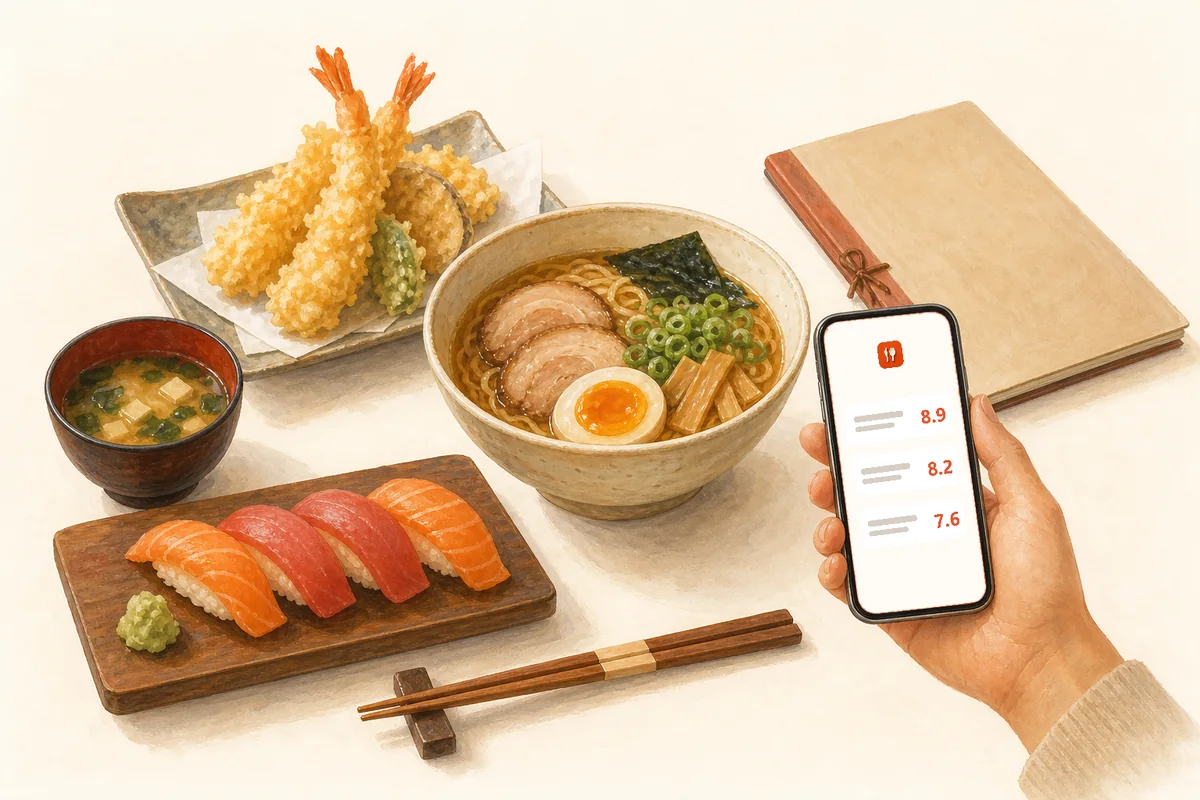
Japanese restaurants often specialise: a ramen shop serves ramen, a sushi bar sushi, a tonkatsu restaurant cutlets. An izakaya or a family restaurant has a little of everything. Japanese names are given in Japanese script too, which helps with a menu that has no English.
Sushi: nigiri vs sashimi, and the rest
Nigiri vs sashimi: nigiri is fish on a small mound of rice, sashimi is the fish alone, sliced, with no rice. Sushi means the rice, so sashimi on its own is not sushi.
1. Nigiri にぎり寿司
A small, hand-pressed mound of vinegared rice with a slice of fish or seafood on top, often with a dab of wasabi in between. Salmon, tuna and prawn are the usual first choices. Clean and gently sweet from the rice; the topping sets the taste. Fatty tuna and salmon are rich and buttery, white fish is light.
2. Sashimi 刺身
Slices of raw fish or seafood served without rice, usually with soy sauce, wasabi and thin strips of radish. Pure and delicate: you taste the fish itself, so freshness matters more than anything.
3. Maki (rolls) 巻き寿司
Rice and fillings rolled in seaweed and cut into rounds. Thin rolls hold one filling, such as cucumber or tuna; thick rolls hold several. Mild and easy: the seaweed adds a light, salty sea taste.
4. Uni (sea urchin) うに
The soft orange roe of the sea urchin, often served on rice wrapped in seaweed. Expensive, and loved or disliked with equal passion. Creamy, sweet and briny, like the sea turned into custard.
Noodles
5. Ramen ラーメン
Wheat noodles in a rich broth with sliced pork, a soft-boiled egg, spring onion and seaweed. Shops often specialise in one or two styles: shoyu (soy sauce), shio (salt), miso and tonkotsu (a creamy pork bone broth). Deeply savoury. Shio is the lightest, shoyu clear and salty, miso nutty and full, tonkotsu thick and creamy.
6. Udon うどん
Thick, white wheat noodles, served in a hot, light broth or cold with a dipping sauce, often topped with tempura or a fried tofu pouch. Soft, bouncy and mild; the broth is gentle and slightly sweet.
7. Soba そば
Thin, greyish-brown buckwheat noodles. In summer they come cold on a bamboo mat with a dipping sauce, in winter in hot broth. Nutty and earthy, with a firmer bite than udon.
Rice dishes
8. Donburi (rice bowls) 丼
A bowl of rice with a topping simmered in a sweet soy broth. Katsudon has a breaded pork cutlet and egg, oyakodon chicken and egg, gyudon thinly sliced beef and onion. Sweet-savoury, soft and filling: everyday comfort food.
9. Japanese curry カレーライス
A thick, brown curry sauce with potatoes, carrots and meat over rice, sometimes with a breaded cutlet on top (katsu curry). Mild, sweet and rich, closer to a stew than to an Indian curry. Spicier versions are offered as an option.
10. Omurice オムライス
Fried rice, often flavoured with ketchup, wrapped in a thin omelette and topped with more ketchup or a brown sauce. Sweet, tangy and buttery: a favourite with children and adults alike.
Fried and grilled
11. Tempura 天ぷら
Prawns, fish and vegetables such as sweet potato or aubergine in a very thin, airy batter, deep-fried and served with a light dipping sauce or salt. Light, crisp and delicate, not heavy or greasy when done well.
12. Tonkatsu とんかつ
A thick pork cutlet in crisp breadcrumbs, sliced and served with shredded cabbage and a thick, fruity sauce. Crunchy outside, juicy inside; the sauce is sweet, tangy and savoury.
13. Karaage 唐揚げ
Bite-size pieces of chicken marinated in soy sauce, ginger and garlic, then deep-fried. Juicy, garlicky and crisp.
14. Yakitori 焼き鳥
Small skewers of chicken grilled over charcoal: thigh, chicken with spring onion, meatballs and other cuts. You choose tare (a sweet soy glaze) or shio (salt). Smoky and savoury; tare is sticky and sweet, shio lets the chicken speak.
15. Gyoza 餃子
Pan-fried dumplings filled with minced pork, cabbage and garlic, crisp on one side and steamed on the other, dipped in soy sauce and vinegar. Savoury and garlicky, with a crisp bottom and soft top.
16. Okonomiyaki お好み焼き
A thick savoury pancake of batter and cabbage with pork or seafood, cooked on a hot plate and topped with a sweet brown sauce, mayonnaise, seaweed flakes and dancing bonito flakes. Savoury, sweet and smoky, soft inside with crisp edges.
Soups, pots and small dishes
17. Miso soup 味噌汁
A light broth with fermented soybean paste, tofu cubes, seaweed and spring onion, served with most set meals. Salty, savoury and warming, with a gentle fermented depth.
18. Sukiyaki すき焼き
Thin slices of beef, tofu, vegetables and noodles simmered at the table in a sweet soy broth. Traditionally each bite is dipped in beaten raw egg. Sweet, rich and savoury; the egg makes it silky.
19. Chawanmushi 茶碗蒸し
A savoury egg custard steamed in a cup, with pieces of chicken, prawn or mushroom hidden inside. Silky, wobbly and gently savoury: a surprise to anyone expecting a dessert.
20. Edamame 枝豆
Young soybeans boiled in the pod and sprinkled with salt. You squeeze the beans out with your teeth and leave the pod. Fresh, salty and slightly sweet: the classic first order with a drink.
Menu words that tell you how a dish is cooked
A few word endings come back again and again. Spot them and you can guess a dish you have never heard of.
| Word on the menu | What it tells you | Example |
|---|---|---|
| -yaki 焼き | grilled or pan-fried | yakitori, okonomiyaki |
| -age 揚げ | deep-fried | karaage |
| -don 丼 | a bowl of rice with a topping | katsudon, gyudon |
| -nabe 鍋 | a hot pot, often shared and cooked at the table | sukiyaki is a kind of nabe |
| teishoku 定食 | a set meal: one main dish with rice, miso soup and pickles | tonkatsu teishoku |
| omakase おまかせ | the chef chooses for you | omakase sushi |
Izakaya, teishoku and omakase: three ways to eat
What is an izakaya?
An izakaya is a casual Japanese pub where people order many small dishes to share with their drinks, a few at a time, much like tapas. Edamame, yakitori, karaage, gyoza and sashimi are typical. A small starter you did not order may arrive first; it is usually charged as a table fee.
What is teishoku?
Teishoku is a set meal: one main dish, such as grilled fish, tonkatsu or karaage, with a bowl of rice, miso soup and pickles on one tray. It is the easiest way to eat a full Japanese meal at lunch, often at a good price.
What does omakase mean?
Omakase means roughly "I will leave it to you": the chef decides what you eat. At a sushi counter that means a sequence of nigiri, one or two pieces at a time, chosen from the best fish of the day. You see the price up front, but not the dishes, so tell the chef at the start if there is anything you do not eat.
All 20 at a glance
| Dish | Taste |
|---|---|
| Nigiri | clean and gently sweet from the rice; the topping sets the taste |
| Sashimi | pure and delicate: you taste the fish itself, so freshness matters more than anything |
| Maki (rolls) | mild and easy: the seaweed adds a light, salty sea taste |
| Uni (sea urchin) | creamy, sweet and briny, like the sea turned into custard |
| Ramen | deeply savoury |
| Udon | soft, bouncy and mild; the broth is gentle and slightly sweet |
| Soba | nutty and earthy, with a firmer bite than udon |
| Donburi (rice bowls) | sweet-savoury, soft and filling: everyday comfort food |
| Japanese curry | mild, sweet and rich, closer to a stew than to an Indian curry |
| Omurice | sweet, tangy and buttery: a favourite with children and adults alike |
| Tempura | light, crisp and delicate, not heavy or greasy when done well |
| Tonkatsu | crunchy outside, juicy inside; the sauce is sweet, tangy and savoury |
| Karaage | juicy, garlicky and crisp |
| Yakitori | smoky and savoury; tare is sticky and sweet, shio lets the chicken speak |
| Gyoza | savoury and garlicky, with a crisp bottom and soft top |
| Okonomiyaki | savoury, sweet and smoky, soft inside with crisp edges |
| Miso soup | salty, savoury and warming, with a gentle fermented depth |
| Sukiyaki | sweet, rich and savoury; the egg makes it silky |
| Chawanmushi | silky, wobbly and gently savoury: a surprise to anyone expecting a dessert |
| Edamame | fresh, salty and slightly sweet: the classic first order with a drink |
Which of these would you like most?
A guide tells you what each dish tastes like. Taste10 tells you how much you will enjoy it. Photograph a Japanese menu, even one written only in Japanese, and see the dishes ranked for your own taste, with the reason why.
Taste10 is in testing. Want to try it early? Get in touch.
Questions and answers
What is the difference between nigiri and sashimi?
Nigiri is a slice of fish on a small mound of vinegared rice. Sashimi is the sliced fish alone, without rice. Because sushi means the rice, sashimi on its own is not sushi.
What does omakase mean?
Omakase means roughly "I will leave it to you". The chef chooses the dishes, usually a sequence of the best fish of the day at a set price.
What is the difference between udon and soba?
Udon are thick, soft, white wheat noodles with a mild taste. Soba are thin buckwheat noodles with a nutty, earthy taste and a firmer bite. Both come hot in broth or cold with a dipping sauce.
What should I order at a Japanese restaurant for the first time?
Karaage, gyoza, tonkatsu, yakitori with tare, a donburi or Japanese curry are easy, popular first choices. For sushi, salmon nigiri and maki rolls are a gentle start.
Is wasabi spicy?
Wasabi has a sharp heat that rises into the nose and fades within seconds, unlike the lingering burn of chilli. At many sushi bars the chef already puts a little between the fish and the rice.
More about taste
- Konbini food: 12 Japanese convenience store foods, and what they taste like
- What does sea urchin taste like?
- What is umami? The fifth taste explained
- How to decide what to order at a restaurant
Sources
- Japan National Tourism Organization. Sushi in Japan Guide. japan.travel/en/guide/sushi-in-japan
- Japan National Tourism Organization. Ramen. japan.travel/en/guide/ramen
- Japan National Tourism Organization. Local Street Food Favorites & Budget Restaurants in Japan. japan.travel/en/gastronomy