
Types of apples and what they taste like: a sweetness chart
The sweetest common apples are Fuji, Gala, Golden Delicious, Red Delicious and Ambrosia; the most tart are Granny Smith and McIntosh. Between them sit sweet apples with a little tang (Honeycrisp, Envy, Jonagold, Cox) and balanced sweet-tart ones (Pink Lady, Cosmic Crisp, SweeTango, Jazz, Braeburn). Texture matters as much as sweetness: some are crunchy and dense, others soft and juicy. To know which one suits you before you buy a bag, photograph the apple shelf with Taste10: it ranks the varieties for your personal taste.
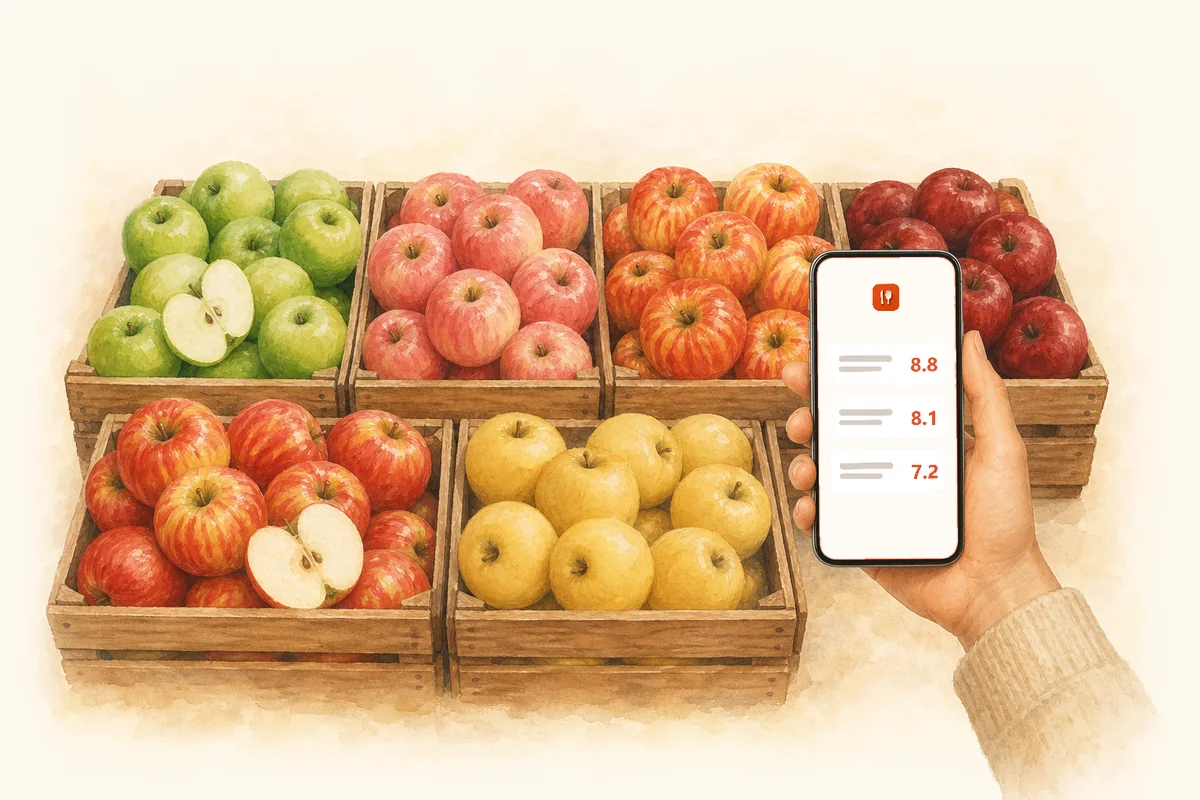
Apple sweetness chart: from sweet to tart
There are thousands of apple varieties, but most shops sell the same twenty or so. This chart puts the common ones in order, from the sweetest to the most tart, with the texture next to the taste. The descriptions follow the growers, breeders and fruit collections that describe each variety (see Sources). The last column is the quickest way to choose: start with an apple close to one you already enjoy.
| Apple | Sweet or tart | Texture | What it tastes like | Try it if you like |
|---|---|---|---|---|
| Fuji | Very sweet | Firm, crisp, juicy | Sweet and mild with very little sharpness. Bred in Japan from Ralls Janet and Red Delicious. | Sweet, juicy fruit with no sourness |
| Gala | Very sweet | Crisp, fine-textured, juicy; less crunch than Honeycrisp | Very sweet and aromatic. From New Zealand. | Mild sweet snacks, pears |
| Golden Delicious | Very sweet | Crisp, juicy | Mild and sweet with a buttery, honey taste and almost no tartness. | Honey, soft sweet fruit |
| Red Delicious | Very sweet | Very firm, juicy; very tough skin | Very sweet and aromatic with little acid. Tastes best fresh; much depends on where and how it was grown. | Sweetness over sharpness |
| Ambrosia | Very sweet | Crisp, juicy | Honeyed sweetness, which gave it its name ("food of the gods"). Grew from a chance seedling in a British Columbia orchard. | Honey, very sweet apples |
| Honeycrisp | Sweet, a little tang | Explosively crisp, coarse, juicy | Juicy and sweet with a honeyed, mild flavour and only a hint of acid. Best known for its crunch. | Crunch above everything |
| Envy | Sweet, a little tang | Satisfying crunch | Balanced sweetness with a fresh aroma. | Gala, but firmer |
| Jonagold | Sweet, a little tang | Fine-textured, juicy, creamy white flesh | Sweet and rich. A cross of Golden Delicious and Jonathan from New York State. | Golden Delicious with more flavour |
| Cox's Orange Pippin | Sweet, a little tang | Firm, juicy | Sweet, rich and aromatic with a nutty note. Raised in England around 1825. | Nutty, aromatic flavours, old-fashioned apples |
| Pink Lady (Cripps Pink) | Sweet-tart | Firm, crisp | A good balance of sweet and sharp, with what its growers call a juicy fizz. From Western Australia. | Sweet and sour sweets |
| Cosmic Crisp | Sweet-tart | Remarkably firm and crisp, very juicy | Plenty of both sweetness and tartness. Bred at Washington State University from Enterprise and Honeycrisp; slow to brown when cut. | Honeycrisp, with more bite |
| SweeTango | Sweet-tart | Big crunch | A sweet first bite that finishes with a zing. A cross of Honeycrisp and Zestar! from Minnesota. | Honeycrisp with more tang |
| Jazz | Sweet-tart | Crisp | Tangy-sweet. From New Zealand. | Apples with a bit of bite |
| Braeburn | Sweet-tart | Crisp and firm, stays firm in storage | Balanced sweet and acid with a perfumed, aromatic taste. Found in New Zealand. | Cox, Pink Lady |
| Empire | Sweet-tart | Crisp, distinct crunch, creamy white flesh | Sweet-tart and aromatic, with notes of pineapple and melon. A McIntosh and Red Delicious cross. | McIntosh, but firmer and sweeter |
| Opal | Sweet-tart | Distinctly crunchy | Sweet and tangy; a bright yellow apple that is slow to brown when cut. | Golden Delicious with more tang |
| McIntosh | Tart | Tender, rather soft, very juicy, white flesh | Tangy and tart with a winey sweetness behind it. Cooks down easily, which makes it a favourite for apple sauce. | Soft, juicy apples, apple sauce |
| Granny Smith | Very tart | Firm, rather coarse, juicy | Very tart, sharp and refreshing. Found in Ryde, New South Wales, in the 1860s. | Sour sweets, lemon, green apple flavour |
Read the chart as bands, not as an exact ranking. Two apples of the same variety can taste quite different, as the next section explains.
What makes an apple sweet or tart
An apple's taste comes from a balance of sugar and acid, mostly malic acid, the main acid in apples. A Granny Smith has a lot of acid; a Fuji or a Gala has little, so its sugar comes through.
Sugar alone does not decide how sweet an apple tastes. A 2017 study at the Fondazione Edmund Mach in Italy compared what a trained tasting panel perceived with what the lab measured, and found that the usual sugar reading (degrees Brix) predicts sweetness only weakly. Sorbitol, a sugar alcohol in the fruit, and aroma compounds, above all fruity esters, also made apples taste sweeter.
Where and how an apple was grown matters too. The UK's National Fruit Collection notes that Red Delicious tastes much better from climates with enough warmth and light, and that Fuji and Braeburn often fail to ripen fully in Britain. An apple picked early or stored for months can taste flatter than the same variety in season.
Crisp, crunchy or soft: the texture side
Many people choose an apple by its bite as much as by its taste. The crunchiest varieties in the chart are Honeycrisp, SweeTango, Cosmic Crisp, Envy and Opal: dense flesh that breaks with a snap. Gala is crisp but has less crunch. McIntosh is tender and very juicy, which is why it cooks down so quickly.
A soft, dry, floury bite is called mealy. It comes with overripe or long-stored apples rather than with one variety, so the same apple can be crisp in October and mealy months later. More on texture words: mouthfeel.
Best apples for eating raw and for baking
- For eating raw: Gala, Fuji, Honeycrisp, Ambrosia, Pink Lady, Cosmic Crisp, SweeTango and Jazz. Red Delicious is best eaten fresh or in salads.
- For pies and tarts: Granny Smith, which works in pies as well as raw. The US Apple Association suggests mixing Golden Delicious with Granny Smith for a pie that is both sweet and sharp.
- For apple sauce: McIntosh, which falls apart when cooked; Honeycrisp and Granny Smith work too. If you use McIntosh in a pie, cut thick slices.
How to choose apples at the shop
- Decide sweet or tart. If you do not like sour fruit, start with the first band of the chart; if you like a bite of acid, start at the bottom.
- Decide on the texture. Dense and crunchy (Honeycrisp, SweeTango, Cosmic Crisp) or tender and juicy (McIntosh, Golden Delicious).
- Start from what you know. Use the last column of the chart: if you like Gala, Envy and Fuji are close; if you like Granny Smith, try Pink Lady or Braeburn for a little more sweetness.
- Buy one before a bag. Try a single apple of a new variety before buying a whole bag of it.
- Mind the season. Most varieties are harvested between midsummer and autumn and sold from storage for the rest of the year, so the same variety can taste fresher soon after harvest.
Where Taste10 fits
An apple shelf can hold ten varieties with names that say little about taste: Envy, Jazz, Opal, SweeTango. Prices differ, and a bag of apples you do not enjoy tends to sit in the fruit bowl. Take a photo of the shelf or the labels in Taste10: it ranks the varieties for your personal taste, best first, with the reason why, so you know which one to buy before you try it. The score is about your taste, not about the quality of the apples.
Find the apple you'll enjoy most
Taste10 learns your personal taste and predicts which apples on the shelf you will enjoy most, so you know before you buy a bag.
Taste10 is in testing. Want to try it early? Get in touch.
Questions and answers
What is the sweetest apple?
Among common varieties, Fuji, Gala, Golden Delicious, Red Delicious and Ambrosia are the sweetest: they have little acid, so their sugar comes through. Honeycrisp is also sweet, with only a hint of tang.
What is the most tart apple?
Granny Smith is the most tart common apple, followed by McIntosh. Pink Lady, Braeburn, Jazz and Cosmic Crisp are sweet-tart: sharp, but with clear sweetness.
What is the crunchiest apple?
Honeycrisp, SweeTango and Cosmic Crisp are known for their crunch, followed by Envy and Opal. McIntosh and Golden Delicious are softer.
What is the difference between Fuji and Gala?
Both are sweet with little acid. Fuji is firmer, with a mild sweetness; Gala is a little softer, very sweet and more aromatic.
What is the difference between Honeycrisp and Gala?
Honeycrisp is larger, juicier and much crunchier, with a honeyed taste and a hint of tang. Gala is softer, smaller and sweeter, with a more aromatic flavour.
What are the best apples for baking?
Granny Smith is the classic choice, often mixed with a sweet apple such as Golden Delicious. McIntosh falls apart when cooked, which suits apple sauce better than pie.
Why does the same apple variety taste different from bag to bag?
Ripeness at picking, the climate where it grew and how long it was stored all change the balance of sugar, acid and aroma. A Fuji or Braeburn grown somewhere cool may never ripen fully.
More about taste
- What is mouthfeel? Meaning, food texture words and examples
- How to know if you'll like a food before you buy it
- What does "astringent" mean in food and drink?
- What does durian taste like?
Sources
- USApple (US Apple Association): Apple varieties, with the pages on Cripps Pink / Pink Lady, Empire, Fuji, Gala, Golden Delicious, Granny Smith, Honeycrisp, McIntosh and Red Delicious. usapple.org
- National Fruit Collection, Brogdale (UK): records for Braeburn, Cox’s Orange Pippin, Delicious, Elstar, Empire, Fuji, Gala, Golden Delicious, Granny Smith, Jonagold and McIntosh. nationalfruitcollection.org.uk
- Washington State University, Pome Fruit Breeding Program: Cosmic Crisp brand WA 38. tfrec.cahnrs.wsu.edu
- Muehlbauer, M. Classic and novel dessert apple varieties for commercial orchards in New Jersey. Rutgers Cooperative Extension, Fact Sheet FS1303. njaes.rutgers.edu
- Aprea, E., Charles, M., Endrizzi, I. et al. (2017). Sweet taste in apple: the role of sorbitol, individual sugars, organic acids and volatile compounds. Scientific Reports 7, 44950. doi.org/10.1038/srep44950
- The growers’ own descriptions: Ambrosia, Envy, Jazz, Opal, Pink Lady, SweeTango.