
What does kimchi taste like?
Kimchi tastes sour, spicy and salty, with a deep savoury flavour and a fresh crunch. Young kimchi is crisp, garlicky and lively; older kimchi becomes more sour, softer and stronger, sometimes with a slight fizz on the tongue.
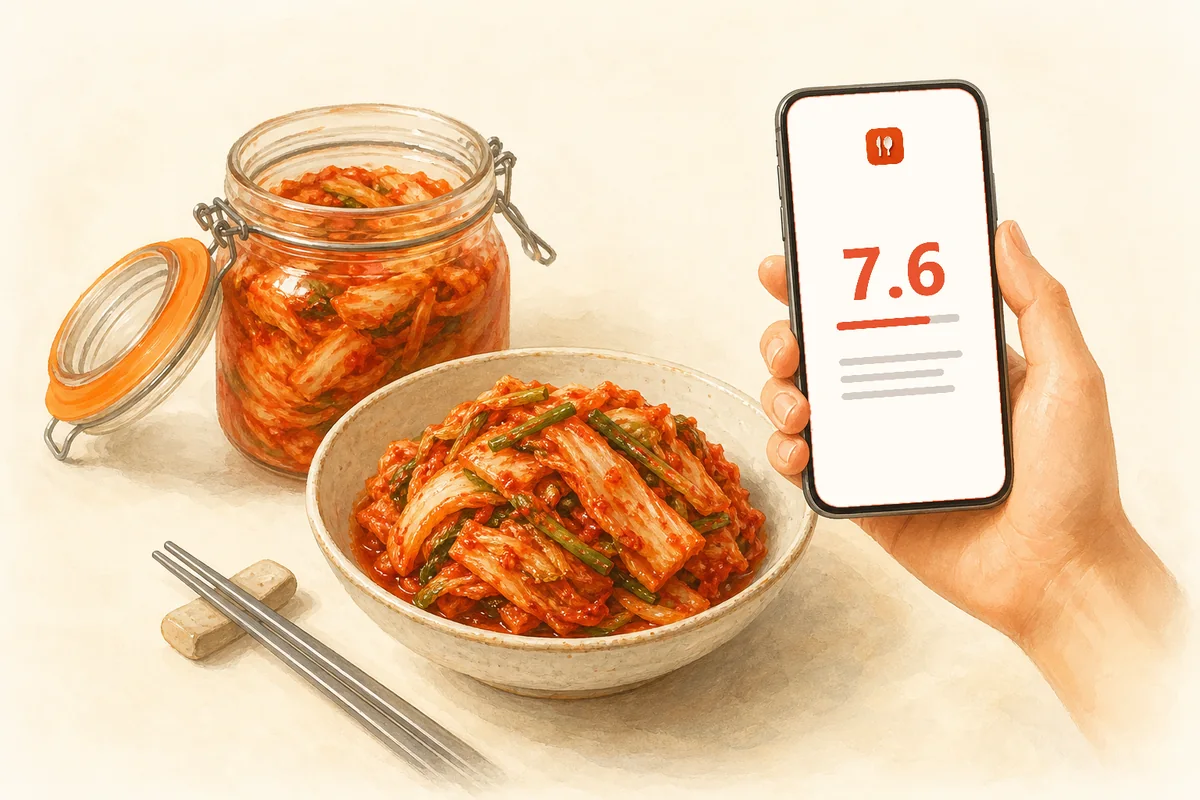
The taste of kimchi, in short
| Quality | What to expect |
|---|---|
| Sourness | High, and it grows as kimchi ages |
| Heat | Usually medium, from Korean chilli flakes |
| Saltiness | Noticeable |
| Savoury depth | High, from garlic and usually fish sauce or salted shrimp |
| Texture | Crunchy cabbage that softens over time |
What kimchi is
Kimchi is Korea's best-known side dish: vegetables that are salted, seasoned and left to ferment. The classic version is napa cabbage rubbed with Korean chilli flakes, garlic, ginger, spring onion and usually fish sauce or salted shrimp. As it ferments, it turns sour and develops its deep, savoury taste.
There are hundreds of kinds, from cubes of radish to cucumber, and even a mild white kimchi without chilli. Making kimchi together in late autumn, called kimjang, was added to UNESCO's list of the Intangible Cultural Heritage of Humanity in 2013.
How kimchi changes with age
- Fresh: crisp, garlicky and spicy, almost like a salad, with only a little sourness.
- Ripe: after some days in the fridge it turns pleasantly sour and more complex. This is how most people know it.
- Old: very sour, soft and strong. It is rarely eaten as it is, but it makes the best kimchi stew and kimchi fried rice.
Why people love it or hate it
- Sour and spicy at once is a pairing people tend to love or avoid.
- The fermented, fishy depth is unfamiliar to many first-timers.
- The smell is strong, especially in a closed fridge.
You may enjoy kimchi if you like
- sauerkraut, pickles and other sour fermented vegetables;
- garlicky, moderately spicy food;
- tangy, punchy flavours next to plain rice or noodles.
Trying kimchi for the first time
- Eat it with plain rice, the way it is meant to be eaten: a little kimchi with each bite.
- Try it cooked: kimchi fried rice or a kimchi pancake are milder and rounder than raw kimchi.
- Worried about the heat? Ask for white kimchi, which has no chilli.
Will you like it? Ask about your own taste
Kimchi can be a daily favourite for one person and too sour or spicy for another. Taste10 learns your personal taste and predicts how much you will enjoy a food before you try it, with the reason why. Photograph a jar of kimchi or a Korean menu and see your own score.
Taste10 is in testing. Want to try it early? Get in touch.
Questions and answers
Is kimchi spicy?
Usually moderately. Most cabbage kimchi has a medium heat from Korean chilli flakes. White kimchi has no chilli at all.
Does kimchi taste like sauerkraut?
Both are sour fermented cabbage, but kimchi is spicier, more garlicky and more savoury, and its cabbage stays crunchier.
Why is kimchi fizzy?
Fermentation produces a little gas, which you can feel as a slight fizz on the tongue, especially in older kimchi.
More about taste
- A first-timer's guide to a Korean menu
- What does natto taste like?
- What is umami? The fifth taste explained
Sources
- Ministry of Foreign Affairs of the Republic of Korea, on the inscription of kimjang on UNESCO's Representative List (December 2013). mofa.go.kr