
I'm at a business dinner abroad and don't recognise anything on the menu
Ask your host what they recommend: in many countries that is part of the hospitality, and it buys you time. Otherwise choose a dish that is easy to eat and close to something you know, stay in the middle of the price range, and match the pace of the table. A translation app tells you what a dish is; Taste10 tells you which of the dishes you will enjoy most, from a photo of the menu.
The moment
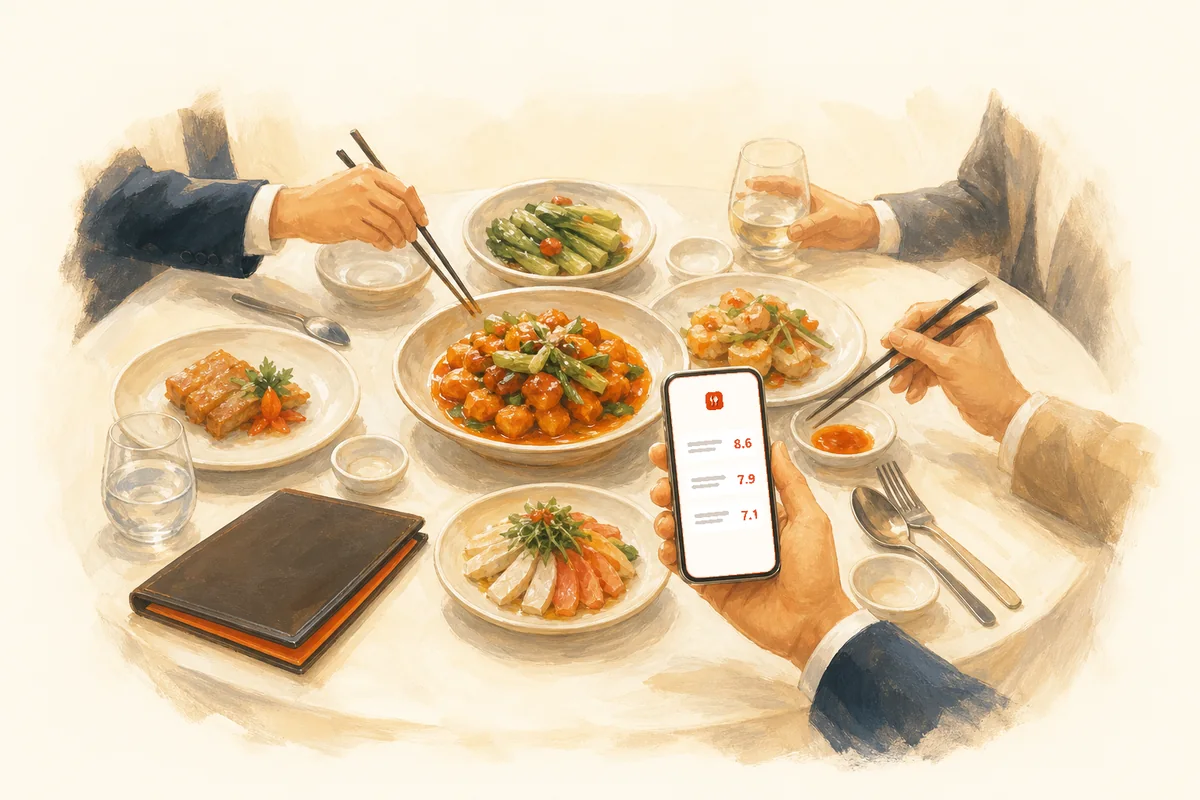
Your hosts have chosen a restaurant they are proud of. The menu is long, partly in a language you do not read, and the dishes you can translate still tell you little: a word for a fish you have never heard of, a sauce with no description, a cooking style you cannot picture. Everyone is waiting politely, and you would rather not spend the evening with a plate you cannot finish.
What usually goes wrong
- Ordering the first thing you can translate, and finding out it is not what you imagined.
- Leaving a full plate, which can look like a comment on the host’s choice of restaurant.
- Picking the most expensive dish because it seems the obvious choice, when the host is paying.
- A dish that is hard to eat elegantly while you are talking business.
- Spending minutes with your phone translating every line while the table waits.
What to do in the next five minutes
- Ask for a recommendation. "What would you recommend here?" is good business dinner etiquette almost everywhere, and hosts usually enjoy answering.
- Listen for what others order. If several people order the same dish, it is likely a house speciality.
- Choose by ingredient and cooking method you know: grilled, fried, braised or steamed, with chicken, fish, beef or vegetables.
- Stay in the middle of the price range unless your host clearly invites you to try something special.
- If you are unsure about heat or a strong flavour, ask about it directly. It is better than a dish you cannot eat.
If the host orders for the whole table
In many places, dishes come to share and the host chooses them. Try a little of each, take a second helping of what you like most, and say so: telling your host which dish you enjoyed is a compliment. Nobody expects you to finish everything on a shared table.
Translation tells you what it is, not whether you will like it
A translation app turns "pla nueng manao" into "steamed fish with lime". That helps, but it does not tell you whether you will enjoy a sour, garlicky and often spicy fish more than the dish next to it. Take a photo of the menu in Taste10 instead: it explains unfamiliar dishes in plain words and ranks them for your personal taste, best first, with the reason why. One quiet photo replaces ten minutes of translating, and the score is about your taste, not about the restaurant.
Order with confidence, anywhere
Taste10 learns your personal taste and predicts which dishes on a menu you will enjoy most, in any language.
Taste10 is in testing. Want to try it early? Get in touch.
Questions and answers
What is business dinner etiquette?
The usual courtesies of a work meal: let the host lead, order something easy to eat in the middle of the price range, match the pace of the table and talk more than you eat.
Should I let the host order for me?
If the host offers, yes: it is often part of the hospitality. Try a little of everything and mention which dish you enjoyed most.
What if I don’t like the food at a business dinner?
Eat a little of what you can, focus on the side dishes and the conversation, and never comment negatively on the food. Choosing well at the start avoids most of these moments.
How do I order when I can’t read the menu?
Ask your host or the staff for a recommendation, choose by ingredients you know, or photograph the menu: an app such as Taste10 explains the dishes and ranks them for your taste.